Play Big in Small Spaces: Fold, Roll, Rally
Today we’re building a compact foldable ping pong table purpose-built for small apartments, balancing regulation feel with clever space-saving tricks. You’ll learn how to measure tight rooms, choose light yet durable materials, create a dependable folding mechanism, and finish the surface for satisfying bounce, quiet play, and fast storage. Expect step-by-step guidance, small-space hacks, and stories from city homes where the rally never has to end.
Measure Twice, Rally Forever
Before cutting a single board, map your room, doorways, ceiling sprinklers, and turning radiuses so the folded table can travel easily and park discreetly. We’ll compare regulation measurements to smart reductions, model paddle swing zones, and test clearance with painter’s tape on the floor. This planning prevents awkward collisions with lamps, radiators, or pets and ensures your project delivers a real game feel without overwhelming your precious square footage.
Mapping Your Room and Clearance Paths
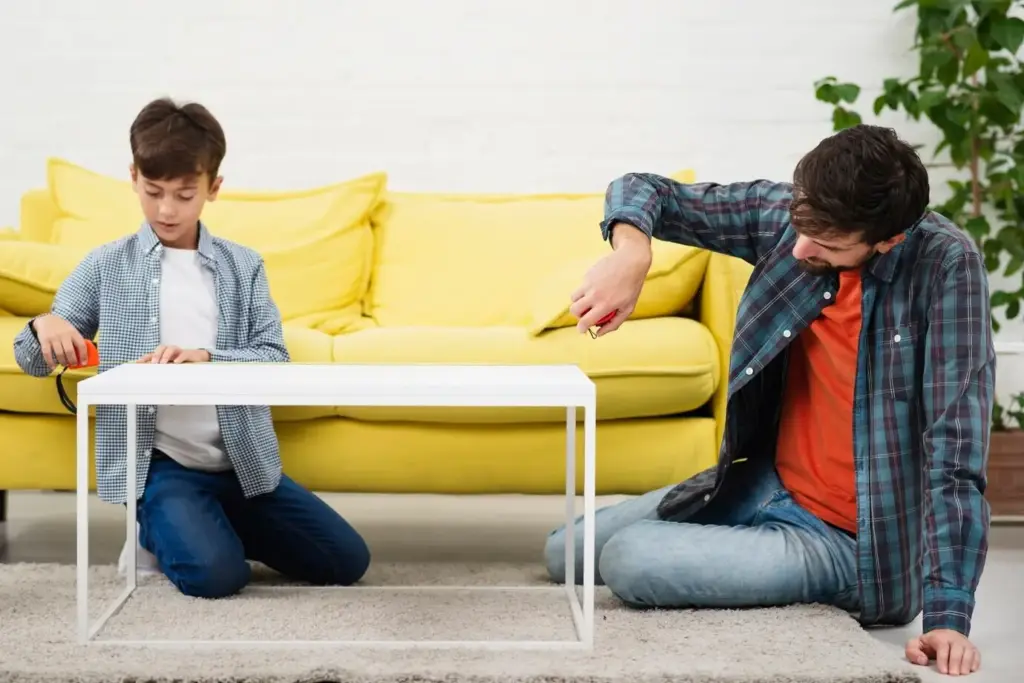
Use a tape measure, laser measure, and masking tape grid to outline playing and folding footprints. Simulate serves, backhands, and sidesteps to identify tight corners you’ll actually feel during rallies. Note outlet locations for power tools, and mark safe rolling routes for the finished table to travel from storage to game mode without banging trim, door handles, or neighboring bikes in the hallway.
Selecting Scaled Dimensions That Still Feel Real
Regulation tables measure 9×5 feet (274×152.5 cm). For apartments, many builders love 3/4 (6.75×3.75 ft) or 2/3 (6×3.3 ft) options that keep rallies lively while fitting living rooms. Preserve the standard 6 inch (15.25 cm) net height, proportionally adjust white boundary lines, and target panel thickness near 1/2–5/8 inch for bounce consistency. Mock proportions with cardboard first, verifying partner reach and spin shots before committing to cuts.
Smart Materials That Keep Things Light and Strong

Choosing the Surface: Plywood, MDF, or Hybrid
Baltic birch plywood offers excellent stiffness and screw-holding, reducing sag across spans. MDF gives a glassy paint finish yet adds weight and dislikes moisture. A hybrid approach—plywood core with a thin MDF overlay—delivers smooth bounce and manageable heft. Aim for 12–15 mm total thickness, supported by perimeter strips beneath. Always acclimate panels indoors before finishing so seasonal movement won’t surprise you with hairline cracks or proud edges.
Hinges, Locks, and Latches That Earn Trust
A full-length piano hinge ensures straight alignment across the seam, making the ball’s bounce predictable near centerline. Pair with recessed draw latches that pull halves tightly together yet release quickly for folding. Add magnetic catches to prevent accidental swing, and consider a safety chain for controlled opening. Choose stainless or zinc-plated finishes to resist wear, and pre-drill every hole to avoid splitting plywood plies when tightening hardware under load.
Foldable Legs, Braces, and Casters for Control
Folding leg brackets keep profiles slim while locking securely in play mode. Cross-bracing with lightweight aluminum angles stiffens the stance without bulk. If rolling storage is essential, pick soft, non-marking casters, preferably swivel on one side for maneuverability. Install adjustable leveling feet on static builds to handle uneven floors. Place all support points so weight distributes evenly, minimizing rattle and preserving that satisfying, even bounce across the entire surface.
Tools, Accuracy, and Calm Indoor Crafting

Straight Cuts Without a Workshop
Create shop-quality cuts using a track guide or a homemade straightedge clamped firmly to panels. Mark once, measure twice, then score the cut line with a utility knife to reduce tear-out. Support offcuts with scrap wood or foam insulation so the saw plate stays stable. Keep blades sharp, cut slow, and finish edges with a sanding block. The result is furniture-grade accuracy achieved quietly on your living-room floor.
Clean Holes, Hidden Fasteners, Confident Assembly
Pre-drill and countersink every screw to avoid raised fibers that telegraph through paint. For a clean look, use pocket holes on undersides and glue where appropriate for strength. Dry-assemble the hinge line first, test fold repeatedly, then commit with threadlocker on final screws. Label parts with painter’s tape for orientation. This deliberate pacing prevents misaligned hardware, stripped holes, and the kind of creaks that can haunt late-night practice sessions.
Safety, Dust, and Noise Etiquette Indoors
A compact HEPA shop vac, a dust mask, and a drop cloth keep air and belongings clean. Work during considerate hours, and rest panels on foam to absorb vibration. Use hearing protection with saws, and never bypass guards. Keep cables tidy to prevent tripping in tight rooms. Plan brief, focused cutting sessions, then switch to quiet assembly and painting. Your neighbors—and the future you—will thank you for a calm, safe build.
Finish That Feels Like a True Table
Surface preparation creates the satisfying bounce you crave. Seal with a sandable primer, level with successive grits, and apply a durable, low-sheen topcoat that resists glare but welcomes spin. Use high-density foam rollers for uniform texture and let coats fully cure to avoid impressions during folding. Paint lines cleanly, install strong yet discreet net posts, and protect edges. The result: consistent rebounds, crisp visuals, and a surface that wears gracefully.
Folding Mechanics and Rock-Solid Stability
Great play demands dependable mechanics. Align your hinge precisely, add alignment dowels or pins near edges, and lock legs with positive brackets. Cross-bracing prevents shimmy, and levelers address uneven floors. For extra polish, slow the fold with a soft strap to protect fingers. Practice deployment until it feels effortless. When construction supports muscle memory, setup becomes a ritual—quick, confident, and safe—even in the narrowest city corridor.
A Dependable Center Hinge and Panel Alignment
Dry-fit the piano hinge along a dead-straight reference, using spacers to maintain an even reveal. Add small alignment pins near corners to prevent tiny shifts that compound across the seam. Check with a long straightedge and play-test bounce along the joint. If light shines through unevenly, correct before finishing. This meticulous alignment delivers the magical moment when the ball kisses the center and behaves exactly as expected.
Leg Locks, Cross-Bracing, and Anti-Wobble Tricks
Choose folding leg brackets with audible clicks so you know they’re secure. Install a removable diagonal brace or thin aluminum crosspiece to tame lateral wiggle. Threaded levelers let you tune height precisely, defending against floor humps. If you add casters, lock two on opposite corners. A dab of threadlocker on critical screws preserves rigidity. These small touches turn a portable build into a table that feels planted and trustworthy.
Storage, Everyday Use, and Joyful Play
The magic is versatility. Slide the folded table beneath a bed, clip it to a wall cleat, or tuck it behind a bookshelf. Top it with a thin cork mat to moonlight as a desk or dining station. Friends will be amazed when a quiet rectangle transforms into instant rallies. A neighbor, Maya, hosts impromptu tournaments in her studio, rolling the table out after dinner and folding it away before bedtime.